BE-IIS-HPP-LAN
An isolated SPI Ethernet HAT++ for connecting a Raspberry Pi to conventional 10/100BASE-TX networks.
Overview
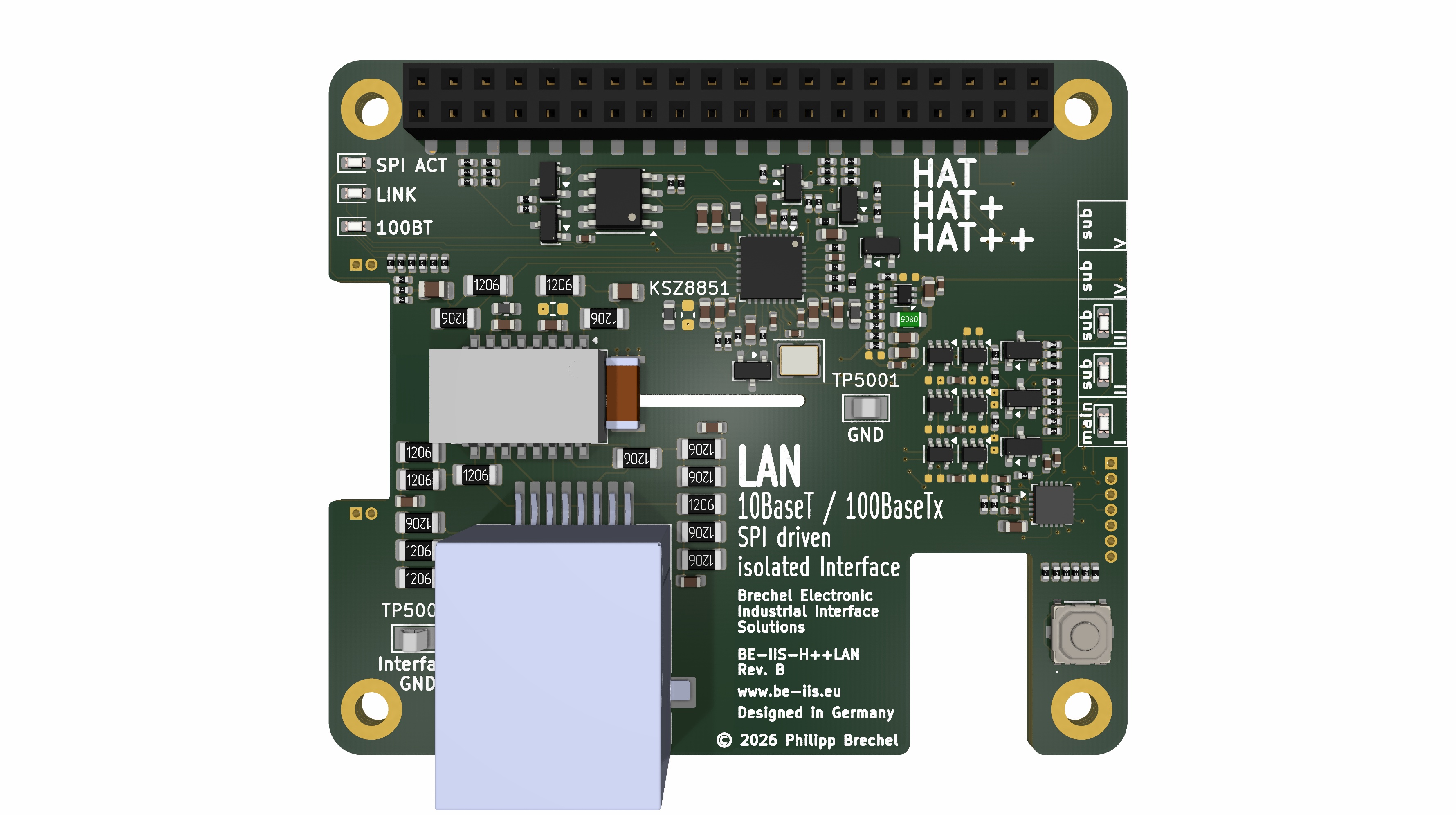
The BE-IIS-HPP-LAN adds conventional 10BASE-T and 100BASE-TX Ethernet to a Raspberry Pi through a KSZ8851 Ethernet controller. It is intended for existing LAN infrastructure and systems that need an additional isolated Ethernet segment.
The board is a HAT++ product and can be combined with other BE-IIS interfaces in one Raspberry Pi system.
Linux integration
The KSZ8851 controller is connected through SPI. The installer provides its driver build support, the instance-specific Device Tree overlays and persistent interface naming.
Typical persistent names follow the beiis-lan0, beiis-lan1 and beiis-lan2 convention. The number corresponds to the selected HAT++ instance rather than the dynamic Linux enumeration order.
Typical use
Use the LAN HAT for an uplink, engineering port, maintenance network or bridge between conventional Ethernet and an industrial interface such as T1L, T1S, CAN-FD or RS-485.
Configure it as a standard Linux Ethernet interface. It supports the normal networking stack and can participate in routing, bridging and firewall configurations.
Two-node Ethernet test
The product test scripts configure a fixed address on the persistent LAN interface and verify communication with a second system.
cd ~/be-iis-installer/products/BE-IIS-HPP-LAN-REVB/test
./test_target1.sh     # configures beiis-lan0 as 100.100.100.1
./test_target2.sh     # configures beiis-lan0 as 100.100.100.2
The two scripts are intended for separate endpoints. Do not run both on the same Raspberry Pi.
T1L / T1S media converter
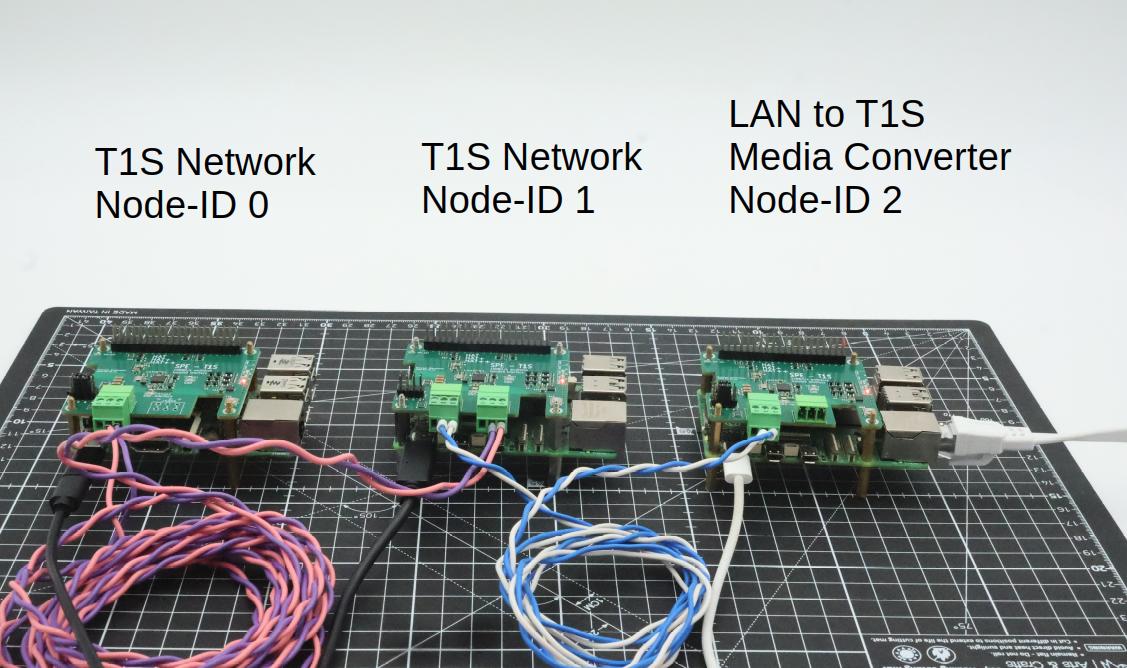
Together with a BE-IIS T1L or T1S HAT, the LAN HAT can form a transparent Layer-2 media converter between conventional Ethernet and Single Pair Ethernet. This is Ethernet bridging, not CAN or Modbus protocol conversion.
The T1L/T1S interface converter application provides the complete bridge, PLCA and diagnostics workflow.