BE-IIS-GMSL2-2CAM
A Raspberry Pi HAT for receiving two remote GMSL2 cameras and forwarding their CSI-2 video streams to the host.
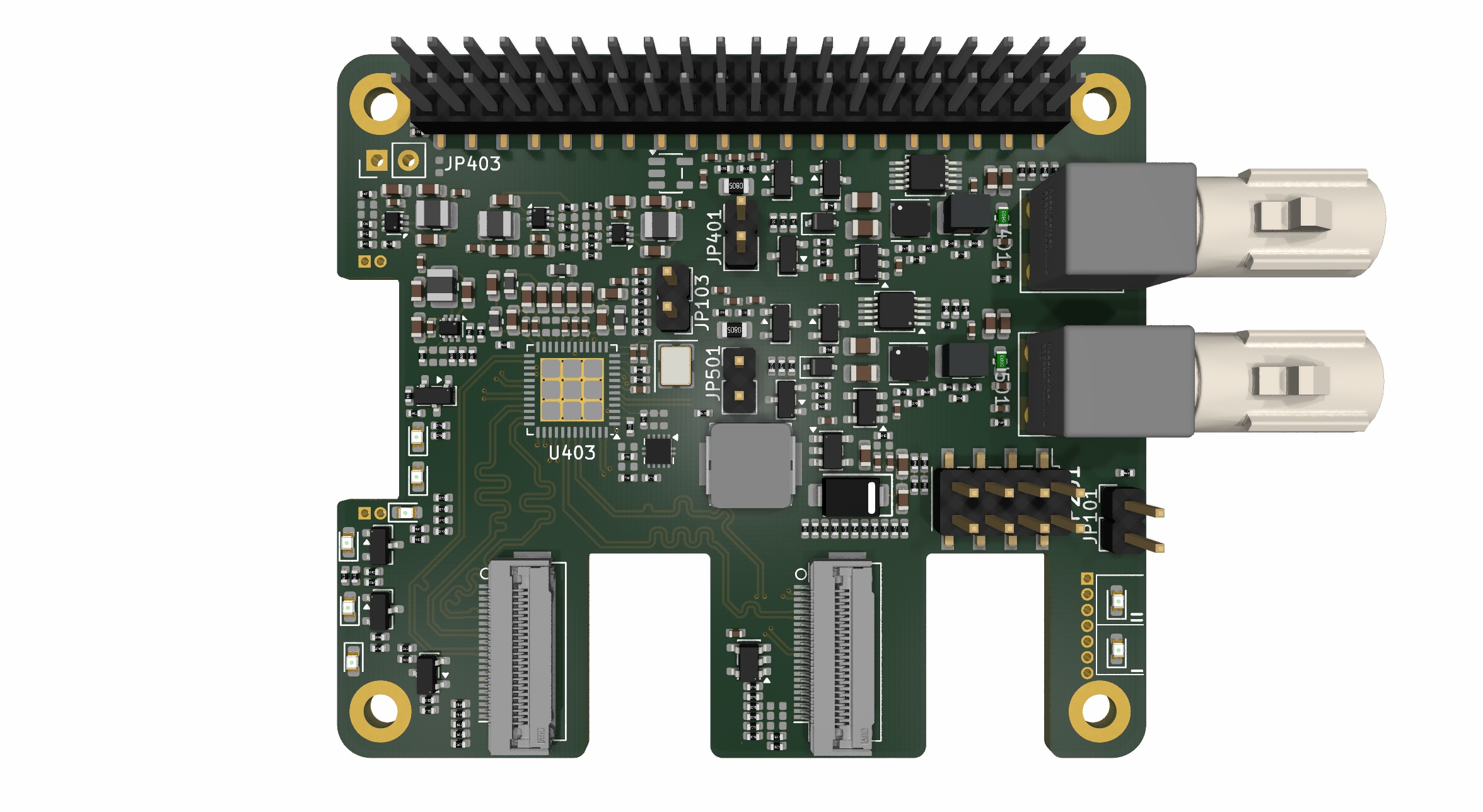
Overview
The BE-IIS-GMSL2-2CAM is the host-side GMSL2 camera HAT. It receives up to two camera links through a dedicated GMSL2 deserializer and provides CSI-2 video output to the Raspberry Pi.
The board is intended for remote camera placement over automotive coaxial cable. It supports control tunnelling so that the Raspberry Pi can communicate with the remote camera sensor through the GMSL2 link.
Bring-up model
The camera installer contains the hardware initialization sequence. It identifies the deserializer and serializer, establishes the required I²C aliases and configures the CSI-2 pipeline.
On a Raspberry Pi 5, the camera I²C bus is checked at /dev/i2c-11. A remote IMX708 sensor can be reached through its configured alias after the link is initialized. The current validated mapping is Link A / IMX708 0x52 / rpicam camera 1 and Link B / IMX708 0x53 / rpicam camera 0.
Dual-camera operation
Link A and Link B are configured separately. Both need correct cable detection, link rate, pipe configuration and I²C tunnelling before the camera software is started.
The board is a practical basis for stereo systems. The software does not replace mechanical calibration: a stereo application still needs a fixed baseline, matched camera settings and calibration data.
For an HDMI stereo demonstration, a rigid, horizontally aligned baseline of approximately 100 to 200 mm is practical at distances around 0.4 to 3 m. Calibrate after fixing the camera spacing, angle, focus and resolution; do not change these parameters after calibration.